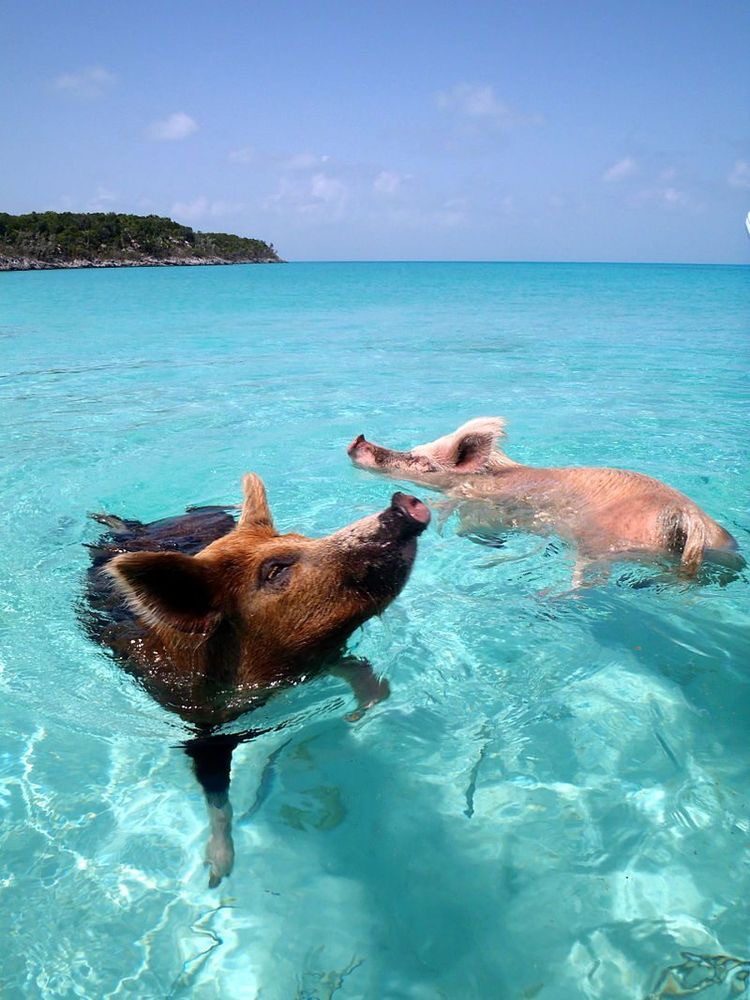
The verdict on Pig Beach
- Who it suitsDay trippers cruising the Exuma cays who want the famous swimming pigs photo and a turquoise stop, reached as part of a boat tour.
- Best spotThe shallows just off the sand where the pigs wade out, best on an earlier tour before the midday rush of boats arrives.
- One thing to knowPig Beach is an uninhabited cay reached only by boat, so you visit on a tour or private charter, and you treat the animals gently and follow the guides rather than feeding or crowding them.
Published 27 March 2026. Last reviewed 27 April 2026
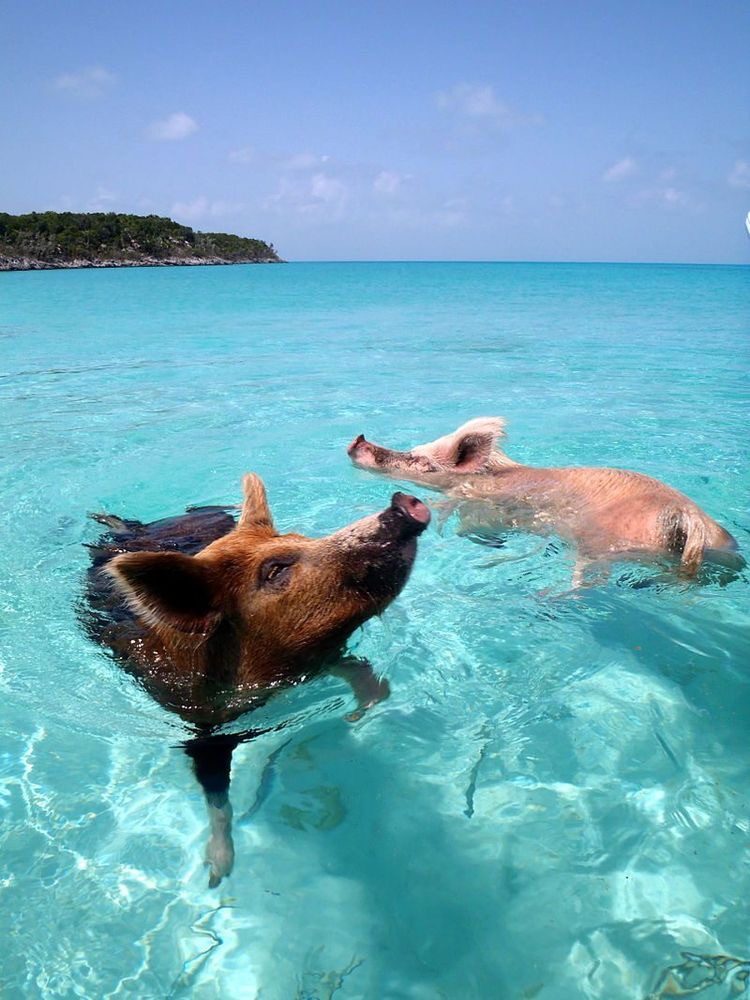
Pig Beach is the unlikely Bahamas celebrity, an uninhabited cay in the Exumas where a colony of feral pigs has learned to wade into the turquoise shallows and swim out to greet arriving boats. Officially it is Big Major Cay, but the world knows it by its residents, and the image of a pig paddling through clear water with the sand behind it has become one of the most shared pictures the islands produce.
It is, first of all, a boat trip. There is no road, no dock village and nothing on the cay itself, so you reach Pig Beach on an organised Exuma tour or a private charter, usually as one stop on a day that takes in sandbars, swimming spots and other cays. The crossing through the Exuma chain is half the pleasure, with the water shifting through every shade of blue along the way.
Be thoughtful about the animals. The pigs are wild, strong and food motivated, and the kindest visit is a calm one. Follow your guide, do not chase or corner them, and never feed them anything they are not given by the people who care for them. A relaxed pig in shallow water makes a far better encounter, and a far better photograph, than a stressed one, so the gentle approach serves everyone.
Come to Pig Beach for the novelty, the turquoise crossing and the photo, and treat it as one bright stop rather than a full beach day. If you want a long stretch of sand to actually settle on in the same islands, Tropic of Cancer Beach on Little Exuma is quiet and beautiful, while Stocking Island off George Town has a real beach scene. For verified clubs and day passes, use our Bahamas beach clubs directory.
Clubs on and near Pig Beach
Pig Beach is an uninhabited cay reached by boat with no club on the sand, and we never invent venues, prices or status. For the clubs and day passes we have verified across the Bahamas, use the Bahamas beach clubs directory.
Public beach access at Pig Beach
Pig Beach is a public uninhabited cay in the Exumas, so the sand is open to everyone along the shore. Loungers and shade where present belong to nearby homes and operators, so ask before you settle in.
No standalone beach club on the sand
We never invent venues, so for arranged loungers, food and drink we point you to the verified options in our directory rather than naming a club that is not here.
Pig Beach, Big Major Cay, Bahamas
Pig Beach is on Big Major Cay in the Exuma chain, reachable only by water. Most visitors come on an organised boat tour from George Town on Great Exuma, from Nassau as a longer day trip, or by private charter, often combined with nearby sandbars and snorkel stops along the cays.
Bring water, sun protection and a dry bag, since the cay has no facilities at all. Take normal care swimming as there is no lifeguard, keep a calm and respectful distance from the pigs, and let your guide manage any feeding so the animals stay healthy and relaxed.
Not ready to book?
Keep the good shorelines coming. Shore Notes is our occasional letter on the best beaches and the clubs worth your day, sent straight to your inbox. One field, unsubscribe any time.
Reserve a daybed near Pig Beach
Send your details and we will help arrange a beach club or daybed booking around the Exumas and the wider Bahamas to pair with a visit to Pig Beach. We confirm current minimum spend and availability with the venue before you commit. Nothing is charged here.
Independent and honest · 1,340 beaches ranked across 103 destinations · We answer to no resort
Pig Beach FAQ
Are the pigs at Pig Beach real and wild?
Yes. A colony of feral pigs lives on the uninhabited Big Major Cay and has learned to wade and swim out to meet boats that arrive in the bay. They are genuinely wild animals, strong and food motivated, so visitors are asked to stay calm and keep a respectful distance.
How do you get to Pig Beach?
Only by boat. Most people visit on an organised Exuma tour from George Town on Great Exuma, on a longer day trip from Nassau, or by private charter. The cay has no road and no facilities, so the boat carries everything you need for the visit.
Is it safe to swim with the pigs?
The pigs are usually calm in the shallows, but they are large wild animals, so you keep a respectful distance, avoid chasing or cornering them and follow your guide. There is no lifeguard, so take normal care in the water as well, since conditions are typical and never guaranteed.
Should you feed the pigs at Pig Beach?
Only under the direction of your guide or the people who care for the animals. Random feeding, especially of unsuitable food, harms their health and can make them pushy. The kindest and safest visit is a calm one where you let the caretakers manage any feeding.
When is the best time to visit Pig Beach?
The drier season from December to May brings the calmest seas for the boat crossing and the clearest water. On the day itself, an earlier tour often means fewer boats and more relaxed animals than the busy midday window.